

In the AI era, everything moves fast.
Products evolve weekly. Capabilities compound. Interfaces shift. What felt cutting-edge a few months ago already looks dated. For builders, this velocity is exciting—but it creates a quiet problem: how do you design something that lasts in a landscape that refuses to stand still?
When we started designing Once UI, timeless was not a stylistic ambition. It was a constraint: a response to the reality that in AI, change is guaranteed.
This post is not about visual trends or marketing tactics. It’s about how we think about branding when products change faster than people’s ability to form trust.
What a brand actually is — and what it isn’t
- A brand is not a logo.
- It’s not a color palette.
- It’s not a slogan or a clever line on a landing page.
Those are artifacts. Outputs. Symptoms.
A brand is the perception of your product as a whole. It’s who recognizes it, and more importantly, what they assume the moment they do.
- Before someone reads your copy.
- Before they explore your features.
- Before they try your product.
Branding is the mental shortcut people form over time. It’s expectation, memory and association. And that’s why branding can’t be rushed: you don’t define it once, but earn it through repetition.
The problem with branding AI products
AI products live on unstable ground: capabilities expand, models improve. What your product does today is not what it will do tomorrow. Screenshots age badly. Feature-driven visuals expire quickly. Even value propositions have shorter lifespans than they used to.
This creates a tension.
If you anchor your brand too closely to functionality, you guarantee obsolescence. If your visuals explain how something works instead of why it exists, they become outdated the moment the product evolves.
In this context, abstraction is not avoidance. It’s a survival strategy.
A timeless AI-native brand cannot be about what the product does today. It has to live on a different timescale.
What we wanted Once UI to become
Once UI was never meant to be loud. From the beginning, we had a clear aspiration—not a positioning statement, but a direction.
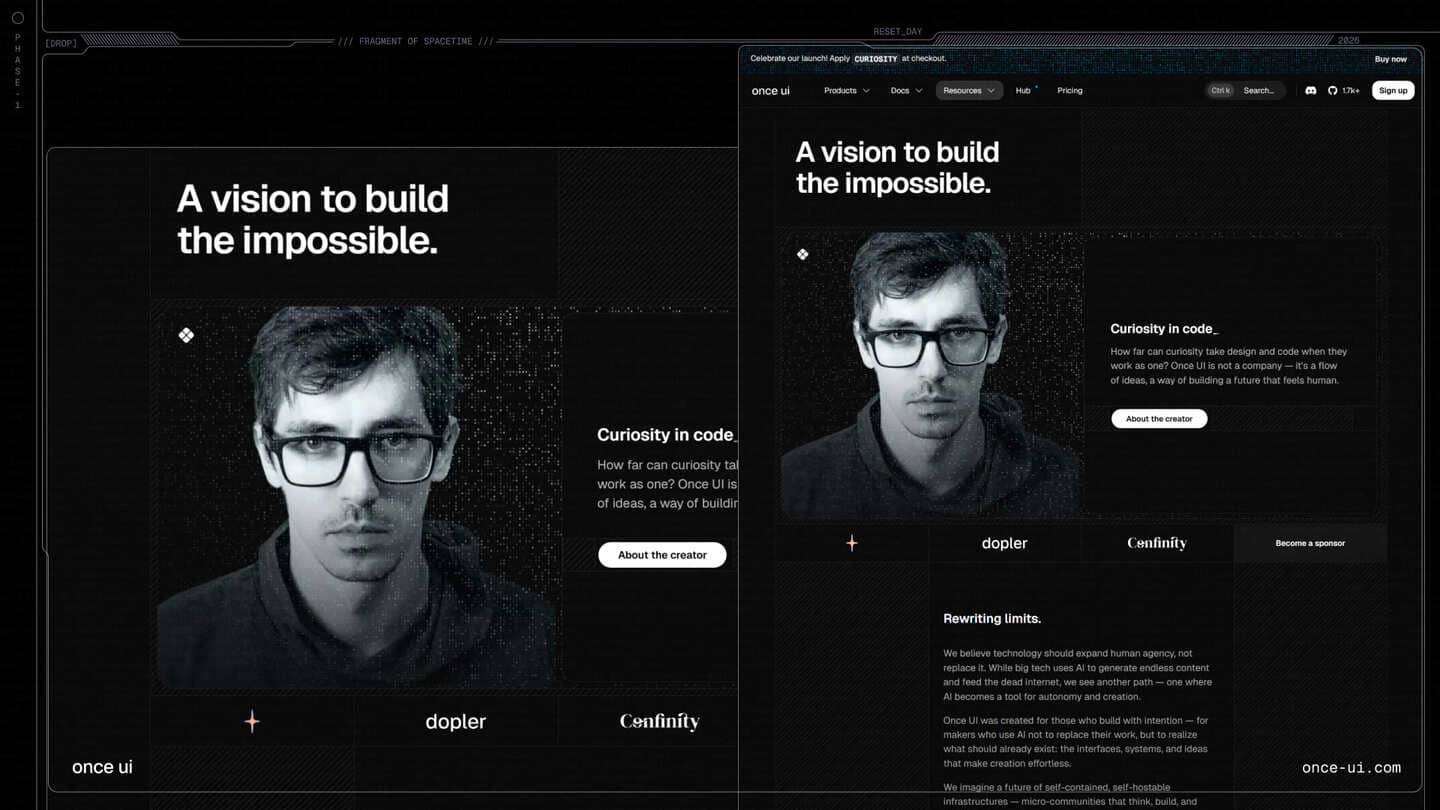
We wanted:
- Design quality as a baseline, not a differentiator
- Simple usage and integration as a form of respect for builders
- World-class design standards made accessible
The kind of polish people associate with elite product teams. The kind that usually requires years of iteration, deep design culture, and large teams.
But made available to solo founders and small startups, with a fraction of the workforce and noise.
The brand had to signal this intention before the product could fully prove it.
The risks we accepted
This approach is not safe. Minimalism doesn’t hide flaws—it exposes them. Abstraction without substance collapses quickly. Philosophy without execution feels hollow.
We accepted several risks deliberately:
- Using a generic symbol as a logo
- Avoiding illustrative mascots or metaphors
- Communicating philosophy instead of features
- Choosing calm in an ecosystem optimized for urgency
This only works if the product earns it over time: a restrained brand amplifies both strengths and weaknesses.
Branding like this is not decoration, but a bet on future consistency.
How we defined the brand

Choosing a symbol that everyone understands
Our logo is simple. Almost generic, by intention.
Using the standard symbol of a component system as your brand mark is a bold move. You can’t rely on novelty or cleverness. There’s nothing to hide behind.
It’s similar to using a star to represent AI. Many companies do it, yet very few become memorable.
A generic symbol only works when the brand behind it becomes recognizable on its own. Meaning has to be built through presence, not embedded in the shape.
Philosophy over product
We don’t use product screenshots for our primary visuals. Not because the product isn’t worth showing, but because products change. Interfaces evolve. What looks current today becomes dated faster than you expect.
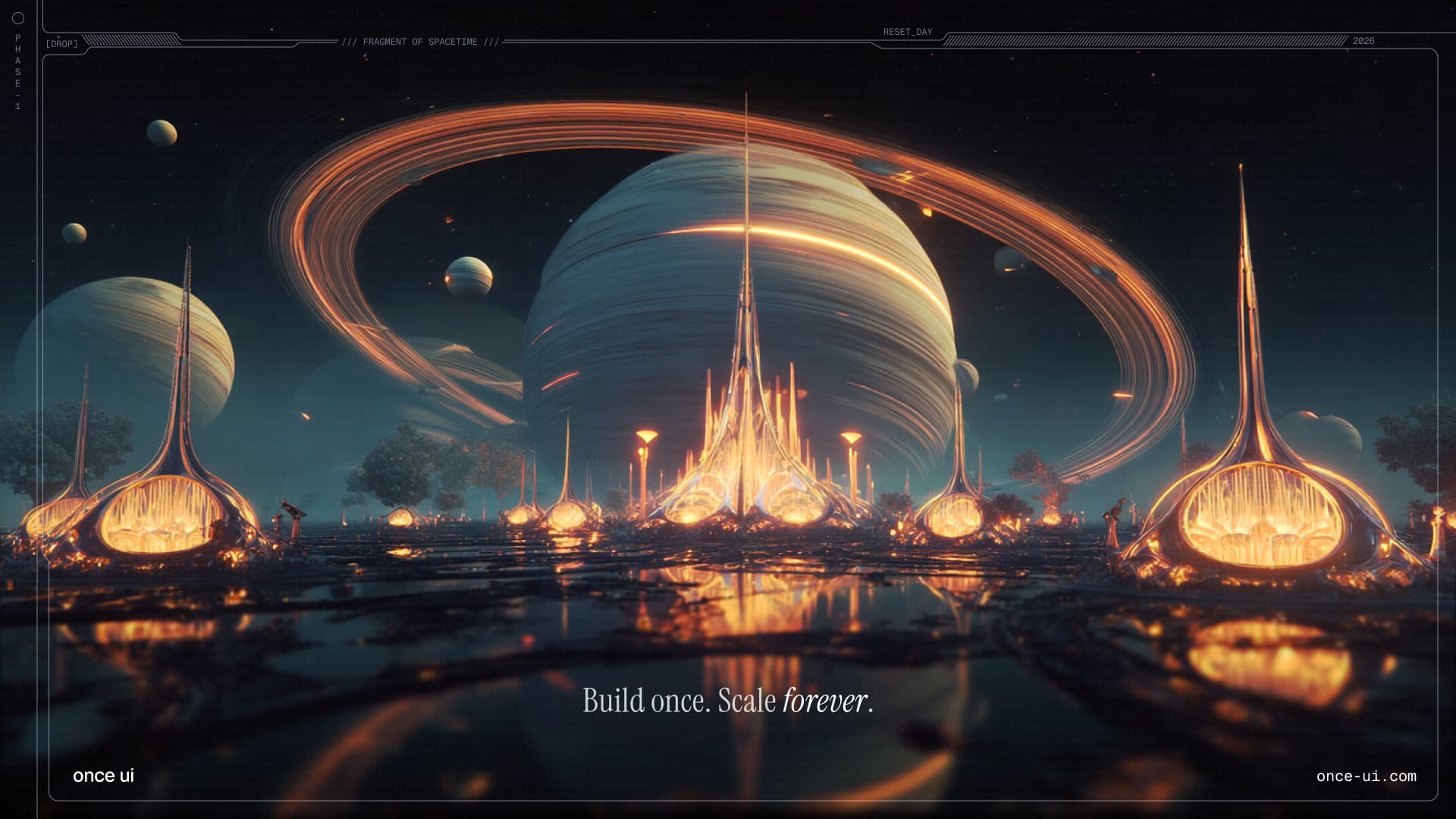
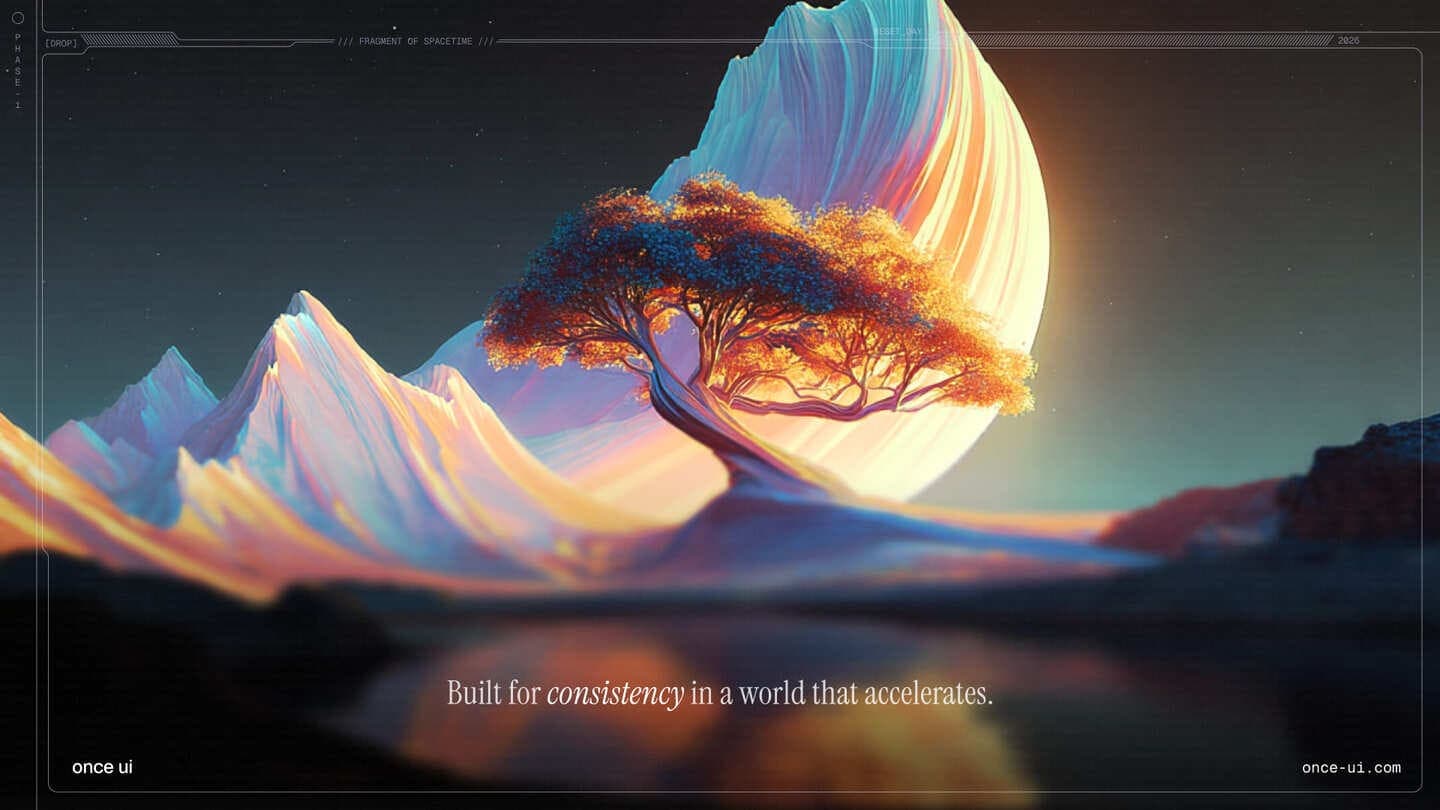
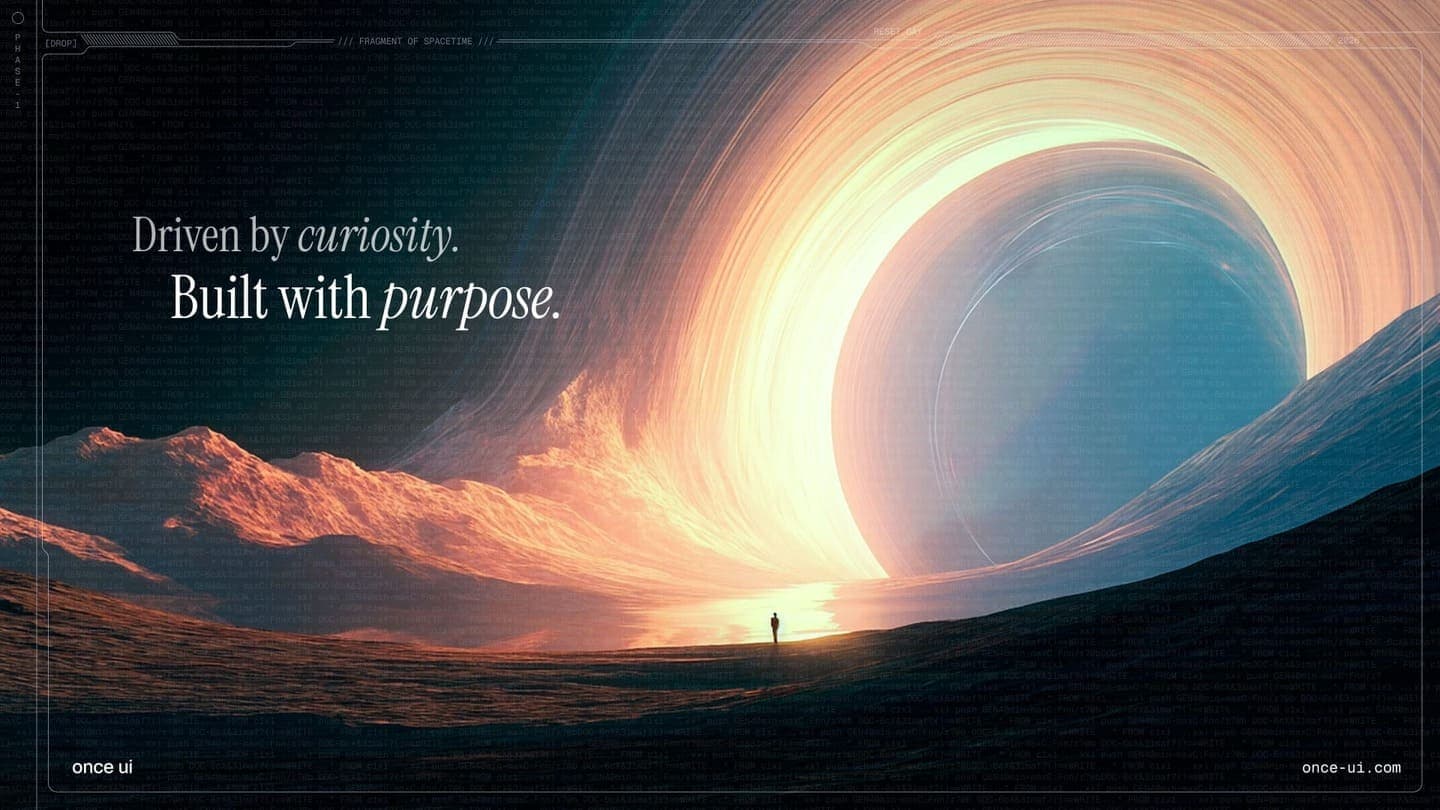
Instead, we chose abstraction. Our visuals are AI-generated renders—but not raw outputs. They’re treated as material, not final assets.
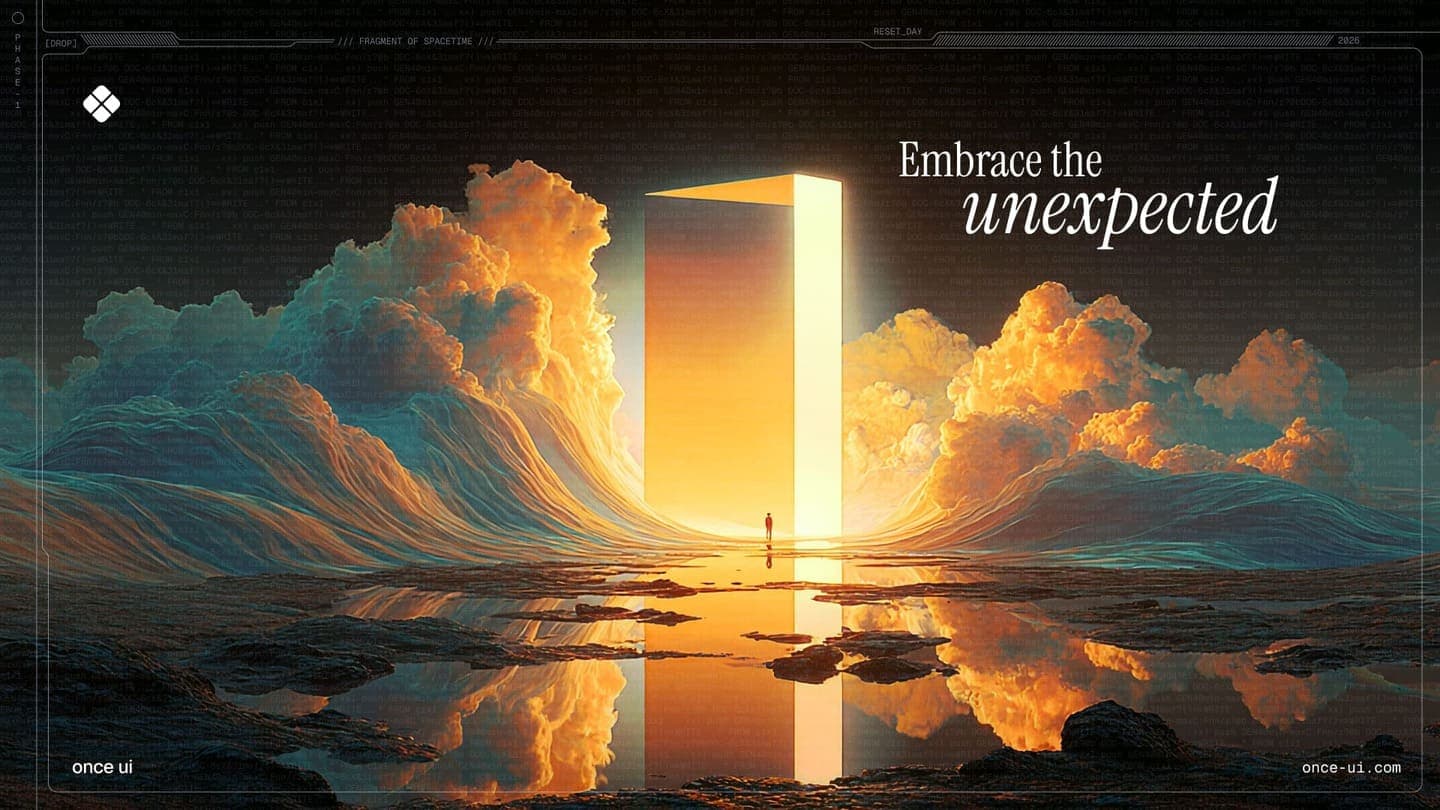
We communicate ideas rather than explanations. Mood rather than mechanics. The goal is not to show how Once UI works, but to express what it stands for.
The workflow, briefly
Images are generated in Midjourney using our own style references. The process is fast, simple, and reproducible. We can create many variations quickly.
But raw generation isn’t enough. The images lack coherence.
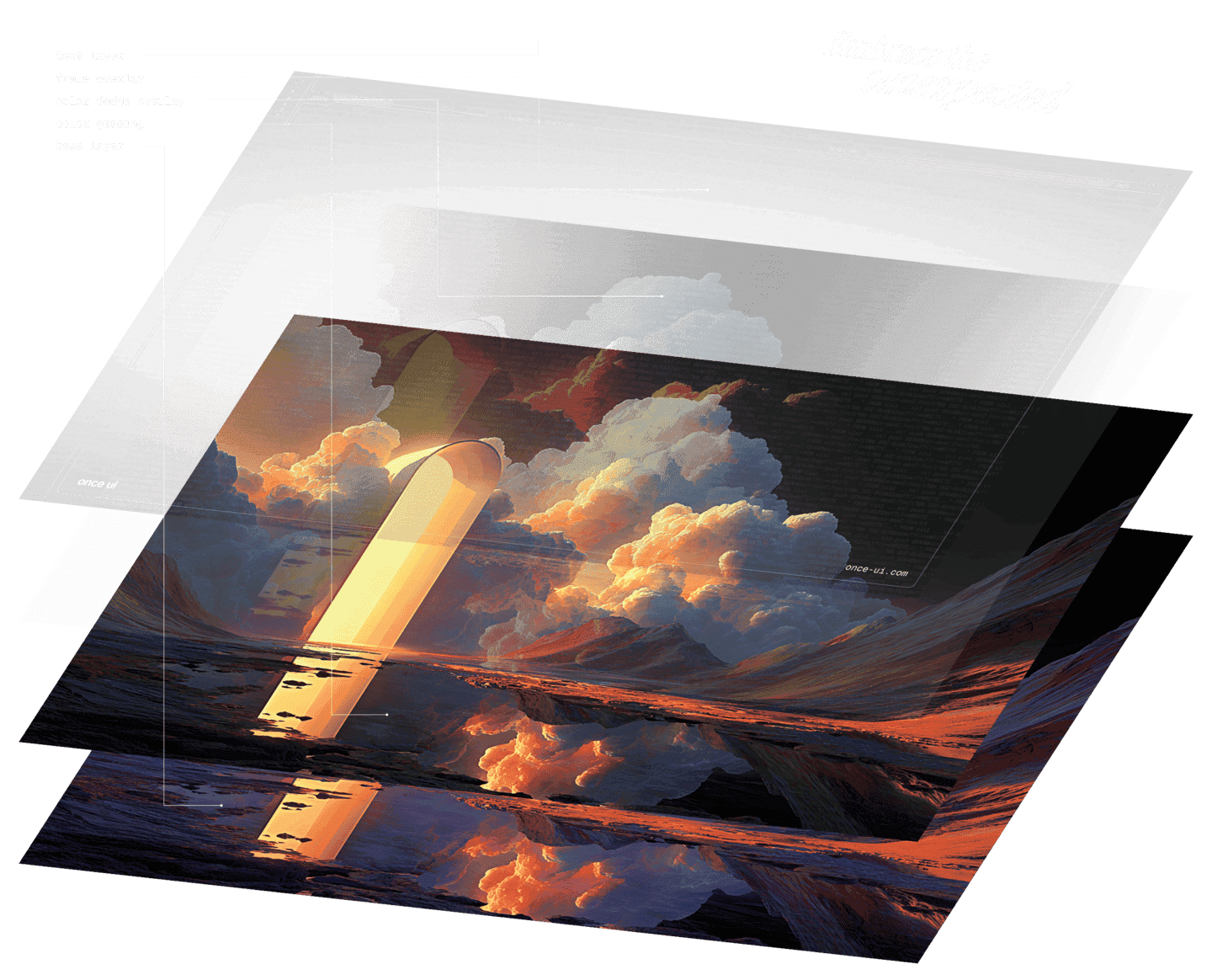
We color-grade them, fine-tune the atmosphere, and add subtle framing overlays—minimal, high-tech, recognizable. These overlays introduce a consistent aesthetic: a faint vignette, a sense of depth with progressive blur, resulting in a production-quality finish.
The final asset is composed of several layers and adjustments: small tweaks that make the image feel part of a single world.
Finally, we add language: short titles of small, philosophical statements. Each one communicates a fraction of our values. They don’t explain, they suggest.
Consistency multiplied by time
Branding is not about making a strong first impression. It’s about making the same impression repeatedly.
The more often someone recognizes a fragment of your visual language, the more familiar it becomes, and familiarity builds trust.
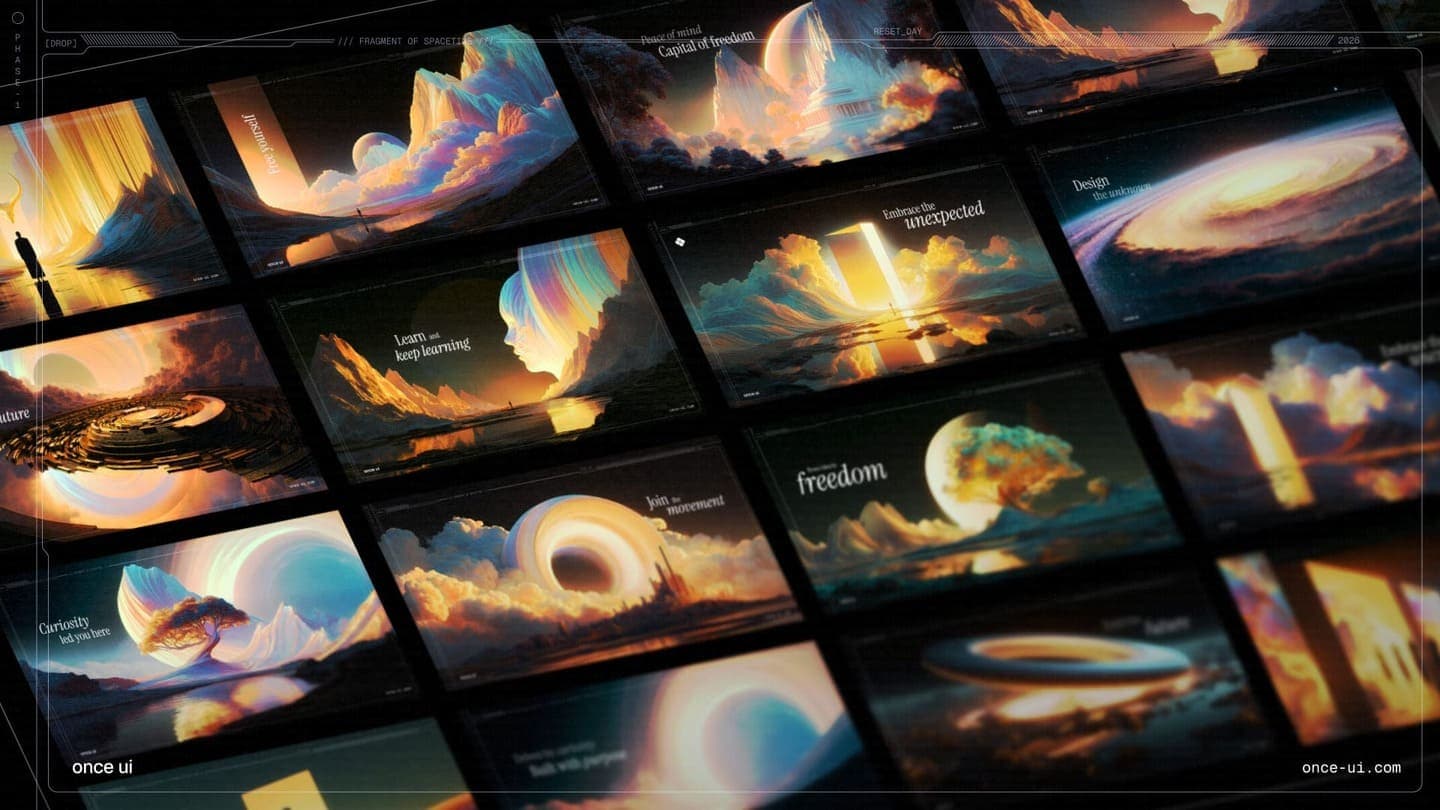
Trust is biased. Pattern-based. Emotional.
The goal is not to deceive people into believing something you’re not. It’s to communicate consciously. To tell the story you want to tell—and then live up to it over time.
A brand is a story you repeat until others repeat it for you.
Borrowed philosophy
Once UI doesn’t invent a philosophy of its own. It borrows one from its parent brand, Dopler. That foundation gives it depth from day one. A set of values that don’t shift with trends or product cycles.
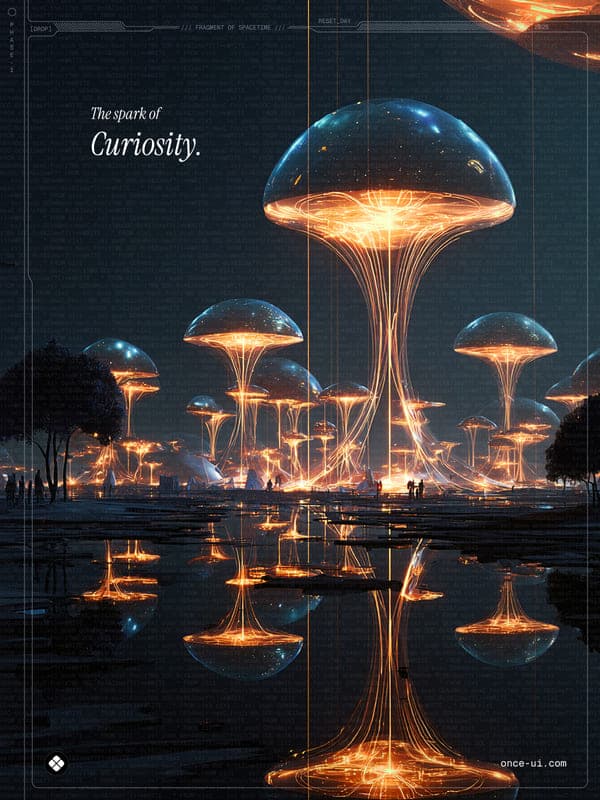


1. Curiosity
In a world where facts are abundant and knowledge is cheap, memorization no longer differentiates. What matters is what moves you. Curiosity gives direction. It shapes taste. It determines which questions you ask—and which paths you explore.
It’s not about knowing more.
It’s about caring enough to look deeper.
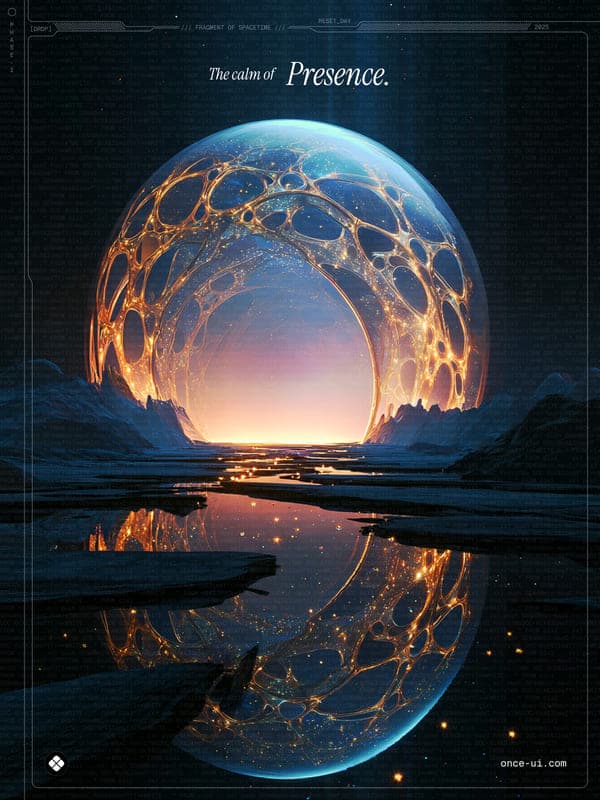
2. Presence
Attention is fragmented. Hype cycles peak in weeks. Everyone is competing to be louder, faster, more urgent. Presence is the opposite instinct.
It’s calm communication. Speaking deliberately. Choosing clarity over volume. In a noisy system, the one who doesn’t shout becomes noticeable.
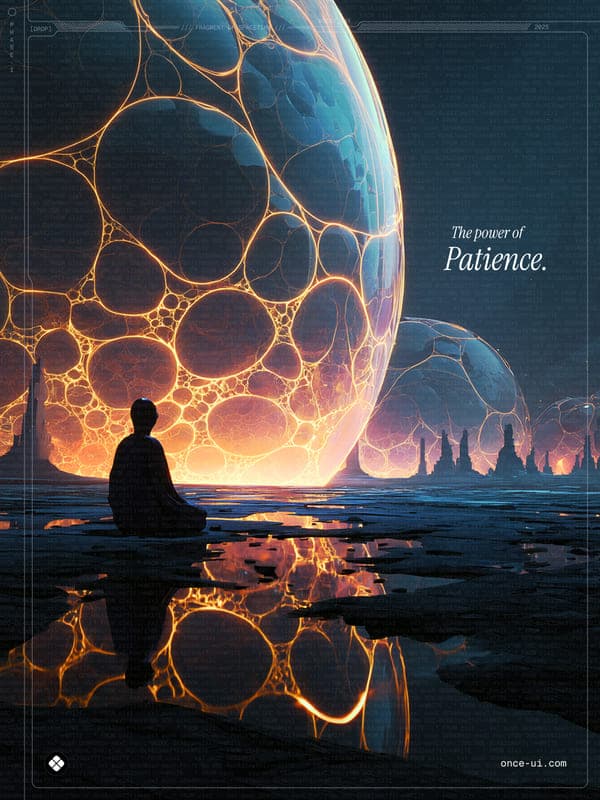
3. Patience
We want everything now. Progress is measured in dopamine hits. Stillness is mistaken for stagnation. Waiting feels like falling behind.
Patience is not passivity. It’s emotional stability.
Staying true to the moment. Building without distress. Trusting that consistency compounds even when nothing seems to happen.
Patience brings peace of mind—and better decisions.
Who this brand is for
Once UI is not trying to impress everyone.
It’s for builders who value clarity over hype.
For teams who want tools that disappear into the work.
For founders who are playing a long game.
It’s not for trend-chasers.
Not for attention maximalists.
Not for people who equate noise with progress.
A brand invites some people in by quietly excluding others.
Branding as self-respect
At its core, branding is not about persuasion. It’s an act of care: for your audience, for your collaborators, and for your future self.
It’s how you choose to show up—consistently—even when no one is watching. A brand is not how loudly you introduce yourself, but how reliably you remain the same over time.
And in a world that changes this fast, that might be the most radical choice you can make.
Design Engineers WeeklyLearn about design, development and business